Unwanted noise intrudes on the tranquility of our outdoor spaces, whether from traffic, neighbors, or nearby commercial activity. Fortunately, thoughtful landscaping offers effective strategies to mute the clamor and restore peace.
This guide explores ten techniques, from physical barriers to strategic plantings, helping you design a landscape that not only looks beautiful but also sounds serene. Weave these methods together, incorporating elements like high-quality planters, to create your own quiet oasis.
Table of Contents
Understanding How Landscaping Reduces Noise
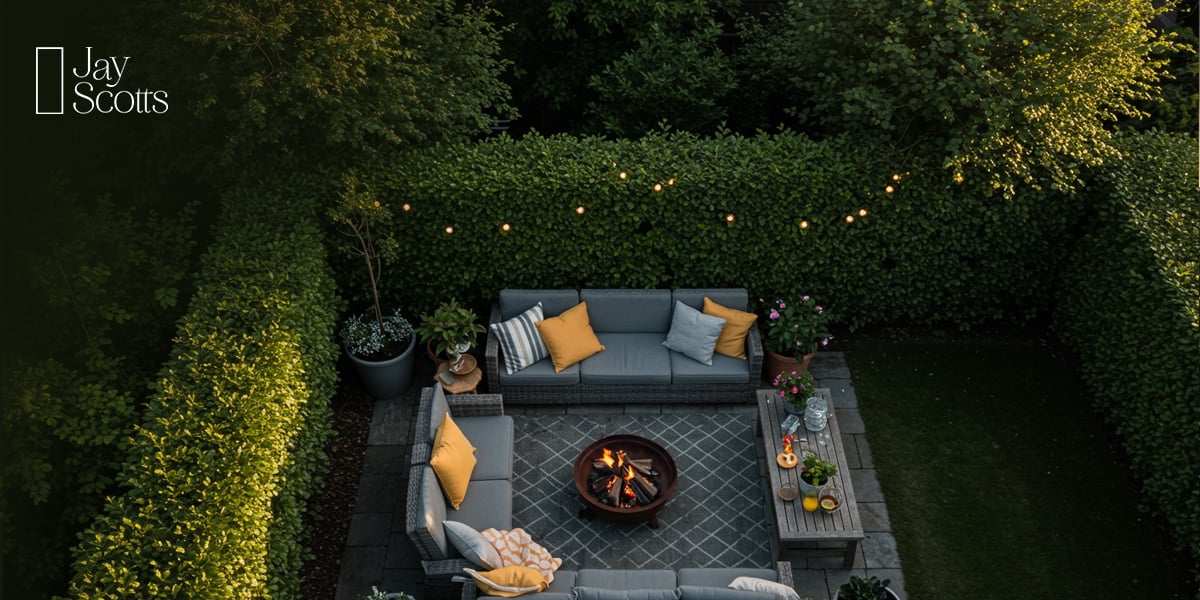
Landscaping combats noise through several scientific principles working in concert.
The Science of Sound Reduction
- Absorption: Soft, porous surfaces like leaves, mulch, soil, and even grass absorb sound waves, converting sound energy into heat rather than reflecting it.
- Deflection: Solid, dense barriers physically block and redirect sound waves away from the listener. Walls, fences, and earthen berms excel at this. Dense vegetation also contributes.
- Refraction: Sound waves bend as they pass over uneven surfaces or through materials of different densities. A rough-textured berm or dense, multi-layered planting can help scatter and refract sound upwards.
- Masking: Introducing desirable sounds, like flowing water, can cover up or distract from unpleasant background noise. This is known as sound masking.
Benefits of Noise Reduction Landscaping
Beyond a quieter environment, these techniques offer:
- Improved quality of life and reduced stress.
- Increased enjoyment of outdoor living spaces (patios, decks).
- Potential increase in property value.
- Enhanced aesthetic appeal and curb appeal.
- Environmental benefits like cleaner air, reduced erosion, wildlife habitat, and localized cooling.
Building Earthen Berms for Sound Management

An earthen berm is essentially a raised mound of soil, often sculpted into the landscape.
How Berms Work to Block Noise
Berms use their mass and height to physically obstruct the path of sound waves, deflecting them upwards or absorbing some energy. The higher and wider the berm, the more effective it becomes, especially against low-frequency noise like traffic rumble. Gentle slopes can also help refract sound waves away.
Tips for Designing and Placing Berms
- Location: Place the berm as close to the noise source as possible for maximum effectiveness.
- Dimensions: Aim for significant height (even 3-6 feet helps) and substantial length to block the line of sight to the noise source. Ensure slopes are gradual enough (e.g., 3:1 or 4:1 ratio) for stability and ease of planting/maintenance.
- Planting: Cover the berm with groundcover, shrubs, or grasses to prevent erosion and add sound absorption. Taller plants on top increase the effective height.
- Planter Integration: Define the base or top edge of a berm with durable planters like the Rio Grande Cylinder Planter. This adds visual structure and allows for additional layered planting in a controlled way.
Installing Privacy Fences and Walls
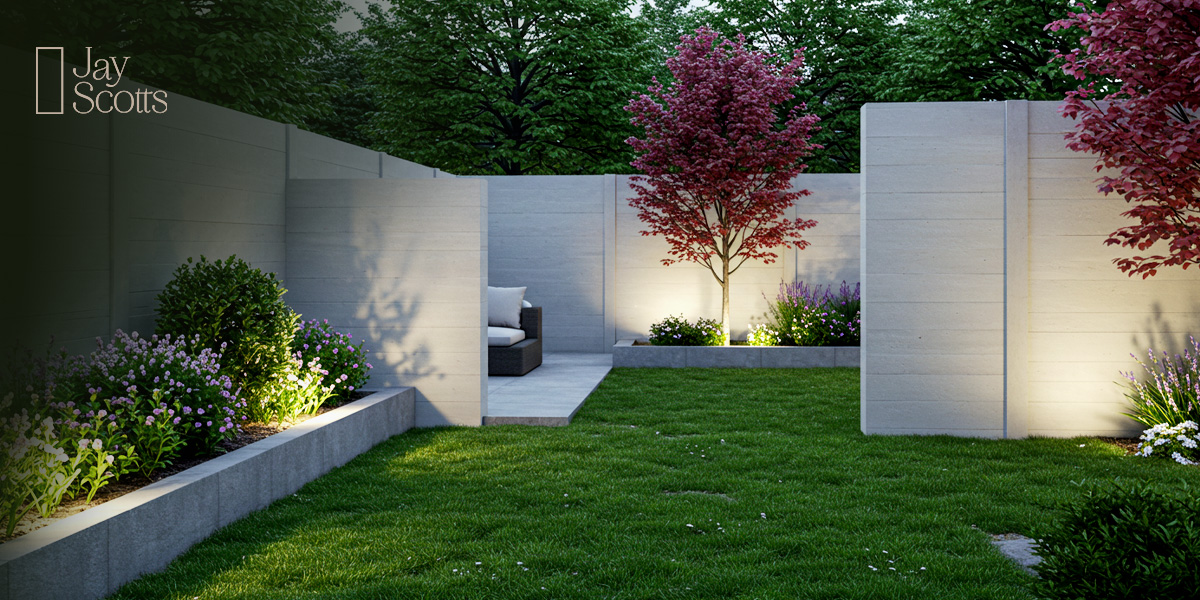
Solid barriers are highly effective noise blockers when designed correctly.
Best Materials for Noise Blocking
Density and solidity are key. Good options include:
- Masonry (brick, concrete block, stone)
- Thick, solid wood panels (tongue-and-groove recommended to minimize gaps)
- Composite fencing materials designed for sound reduction
- Avoid materials with gaps (like standard chain-link or spaced-slat fences).
Strategic Placement for Maximum Effect
- Location: Build as close to the noise source or the property line as feasible.
- Height: Taller is better, though often restricted by local building codes. Ensure there are no gaps underneath or between panels.
- Aesthetics: Solid walls can feel imposing. Soften their appearance by planting vines or placing planters in front. Consider using Linear Planters filled with upright shrubs or grasses to add a green layer against the hard surface, contributing further absorption.
Choosing Trees and Shrubs for Noise Reduction
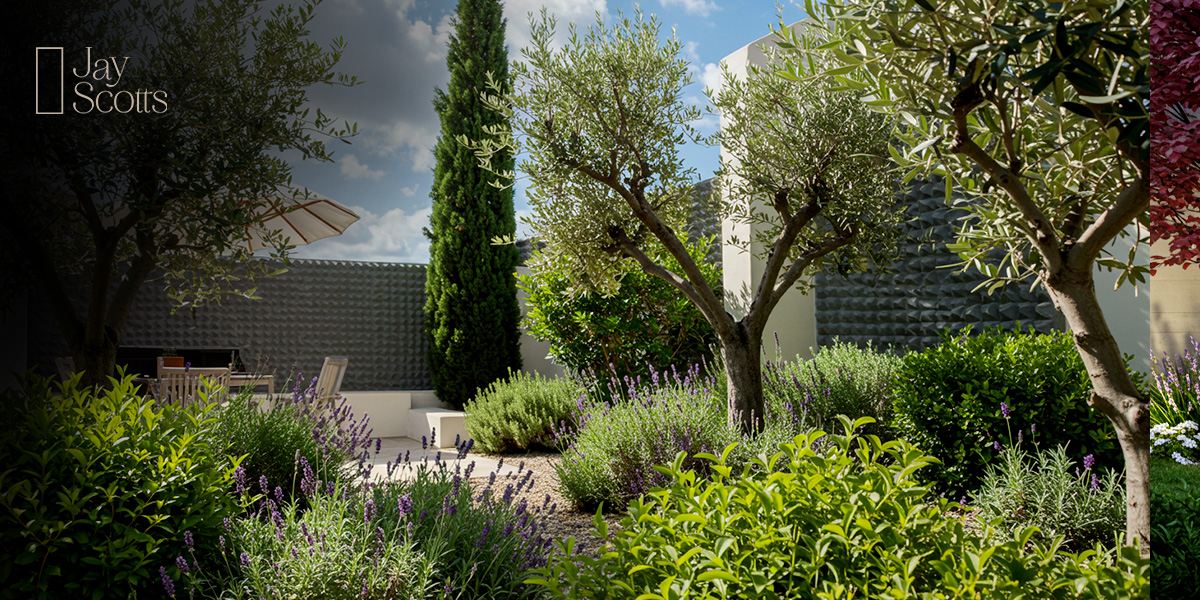
Plants play a vital role through absorption and deflection, especially higher frequency sounds.
Evergreen vs. Deciduous Plants
- Evergreens: Provide year-round noise buffering due to their persistent foliage. They form the backbone of most noise reduction plantings.
- Deciduous: Offer benefits mainly when in leaf during spring and summer. Can be mixed with evergreens for seasonal interest but rely on evergreens for winter effectiveness.
Best Trees and Shrubs for Sound Absorption
Look for plants with:
- Dense branching structures extending to the ground.
- Large, thick, or rough-textured leaves.
- Evergreen foliage.
- Examples: Hollies (various types), Junipers, Arborvitae (‘Emerald Green’), Southern Magnolia, Podocarpus (a Florida hedge staple), Viburnums, Wax Myrtle.
- Planter Use: For patios or areas without in-ground planting space, use large, robust planters. The St. Tropez Large Round Planter can accommodate specimen trees like smaller Magnolias or Crape Myrtles. Upright shrubs fit well in the Toulan Modern Tall Planter. Ensure the planter size supports the mature root system. Jay Scotts fiberglass provides durability for these long-term plantings.
Planting Dense Hedges and Bushes

A thick, continuous hedge acts as a living wall against noise.
How Density Affects Noise Control
A dense hedge provides more surfaces for sound absorption and deflection. Gaps significantly reduce effectiveness. Aim for foliage coverage from the ground up. Planting multiple staggered rows creates a thicker, more effective barrier than a single thin row.
Recommended Hedges and Maintenance Tips
- Plants: Podocarpus, Hollies, Viburnum, Ligustrum (choose non-invasive varieties), Cherry Laurel, Clumping Bamboo (use containment like planters!).
- Maintenance: Regular pruning (often twice a year once established) encourages dense branching and maintains the hedge’s shape and thickness. Water and feed appropriately to ensure healthy, full growth.
- Planters for Hedges: Create instant hedges on paved areas or define spaces using linear planters. The Miami Rectangular Planter or multiple Badalona Rectangular Planters placed end-to-end offer excellent solutions for containing hedge plants while ensuring proper drainage (available upon request from Jay Scotts).
Need to create a green barrier? Discover Jay Scotts’s trough and rectangular fiberglass planters, perfect for planting dense hedges where you need them most.
Incorporating Water Features to Mask Noise
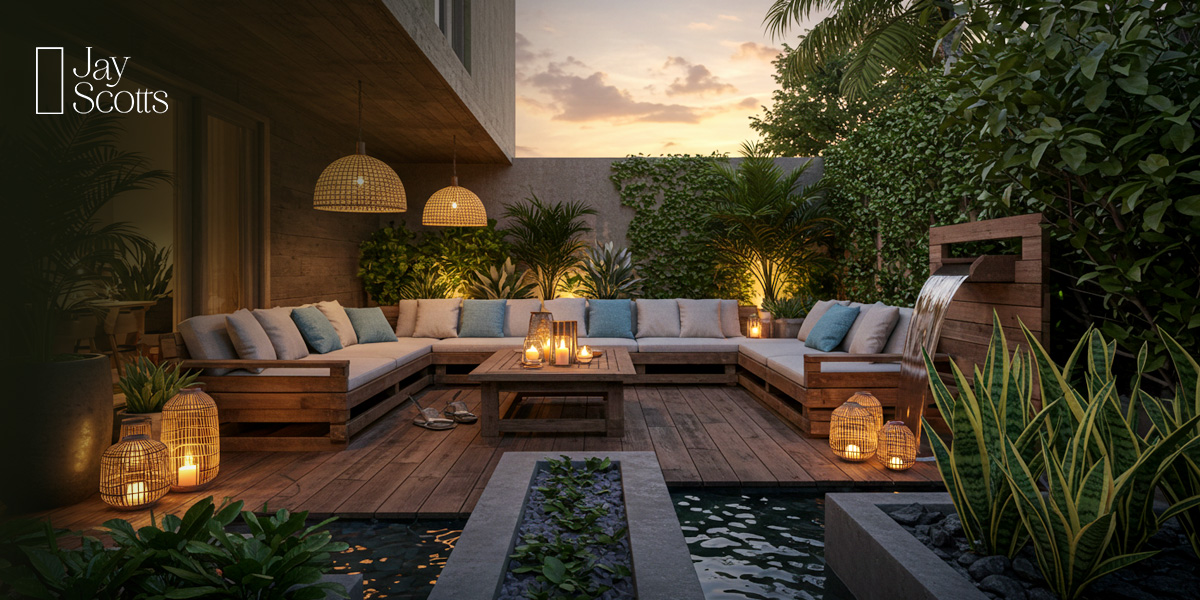
Sometimes, adding a pleasant sound is the best way to deal with unavoidable background noise.
Types of Water Features for Noise Masking
Features that create splashing or falling water sounds work best:
- Fountains with multiple tiers or spray patterns.
- Waterfalls cascading over rocks.
- Babbling streams or brooks (can require more space and pumps).
Placement and Design Ideas for Water Features
- Locate the water feature near seating areas, patios, or decks where you want the masking effect.
- Integrate the feature naturally into the landscape using rocks and water-loving plants.
- Consider scale – a small patio might only need a modest fountain.
- Planter Integration: Use Jay Scotts bowl planters like the Tarragona Bowl Planter as decorative basins for self-contained fountains or group planters with moisture-loving foliage around the water feature’s edge.
Using Noise Barrier Panels and Screens in Landscaping

Specialized panels offer targeted sound blocking.
Types of Outdoor Soundproof Panels
These are engineered products, often made from materials like mass-loaded vinyl (MLV) composites or dense mineral wool encased in weather-resistant shells. They are designed specifically for high levels of sound transmission loss.
Installation and Aesthetic Integration
- Follow manufacturer instructions carefully for installation to ensure effectiveness (often involves sealing edges and minimizing gaps).
- These panels can look industrial. Integrate them by incorporating them into fence designs or hiding them behind plantings. Use planters like the Montroy Cube or Tolga Rectangular filled with attractive plants directly in front of the panels to soften their visual impact.
Creating Vertical Gardens for Noise Reduction

Green walls offer sound buffering in tight spaces.
Benefits of Vertical Gardens in Sound Control
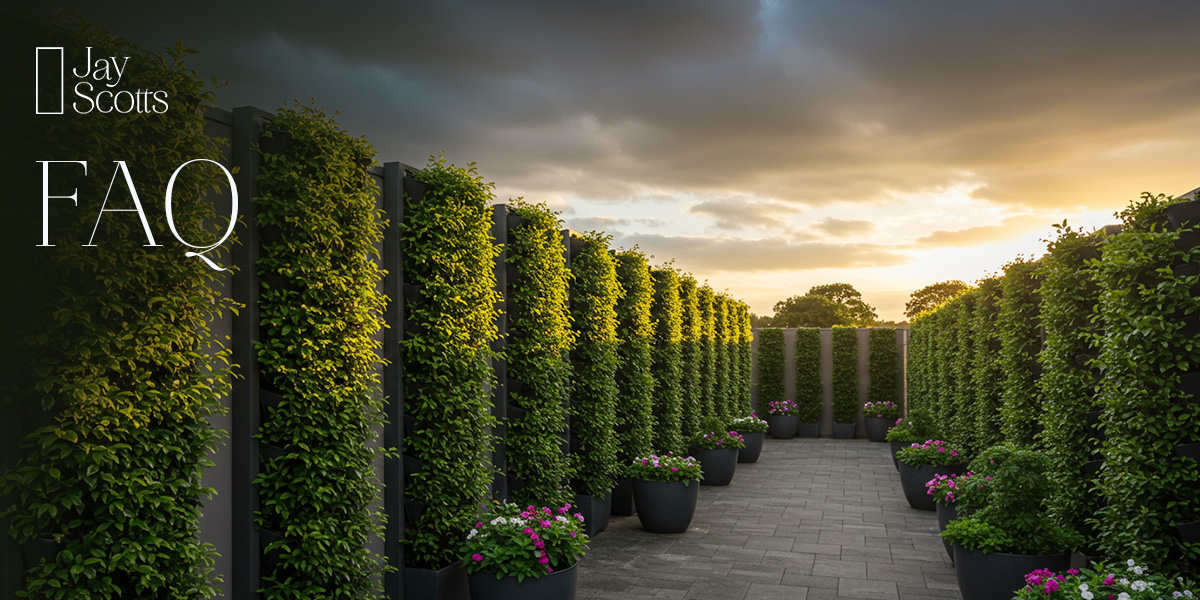
The soil or growing medium and the plant mass itself absorb sound waves. They are particularly useful on reflective surfaces like boundary walls or building facades close to patios or windows. They add significant greenery without taking up floor space.
Steps to Build Effective Vertical Gardens
- Choose a suitable support structure (panel systems with pockets, felt systems, modular containers).
- Select appropriate plants that tolerate vertical growing conditions (sedums, ferns, some grasses, trailing plants).
- Ensure adequate irrigation and drainage.
- Planter Complements: While Jay Scotts focuses on freestanding planters, you can use them effectively with vertical gardens. Place stylish planters like the Cuba Low Rectangular Planter at the base of a green wall for a finished look, or use groups of planters nearby to continue the green theme onto the horizontal plane.
Combining Landscaping Techniques for Best Results
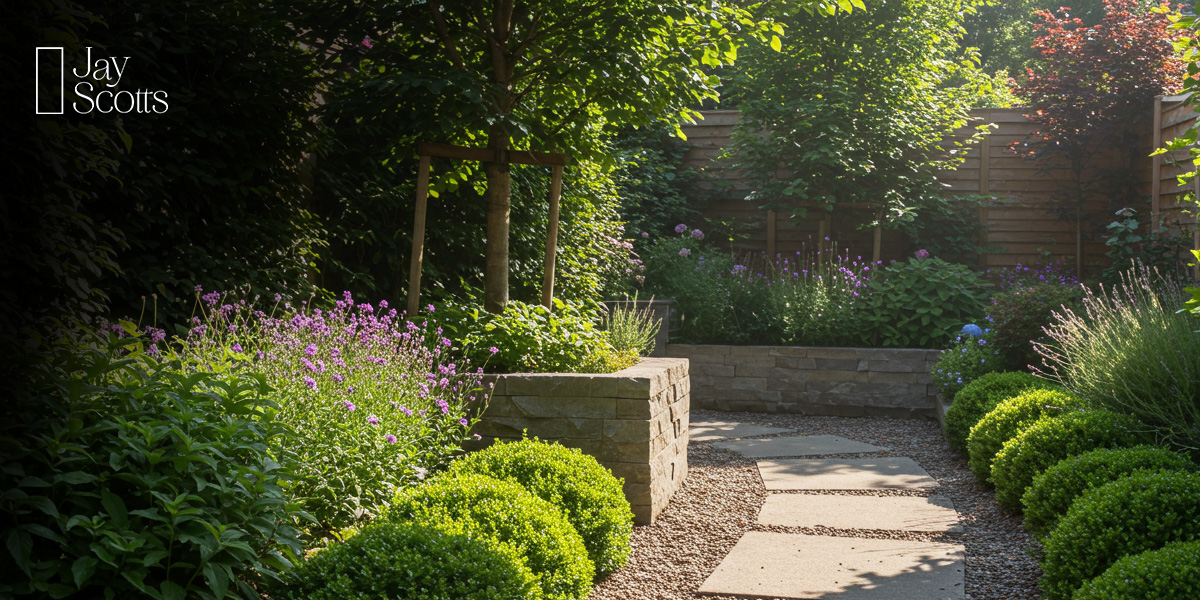
The most effective noise reduction often comes from layering multiple strategies.
Designing Layered Noise Reduction Landscapes
Think in terms of zones and multiple barriers:
- Place the tallest, densest elements (berm, solid fence, tall evergreen hedge) closest to the noise source.
- Add layers of medium-sized shrubs and trees in front of that barrier.
- Use lower plantings, groundcovers, and absorptive mulches closer to the listening area (your home or patio).
- Incorporate sound masking (water feature) within the quiet zone you create.
- Avoid creating straight, clear paths for sound to travel. Use gentle curves and staggered plantings.
Example Layouts and Key Principles
Imagine a layout: Property line near road -> Tall solid fence -> Dense evergreen hedge in Selenge Wide Rectangular Planters -> Earthen berm planted with shrubs -> Lawn/patio area with water feature -> House. The key is creating distance and multiple obstacles (absorbing and deflecting) between the noise and you. Planters allow adding layers even on hardscaped areas within this design.
Maintaining Your Noise Reduction Landscape

An effective noise-reducing landscape requires ongoing care to maintain its performance.
Seasonal Maintenance Tips
- Pruning: Regularly prune hedges and dense shrubs to maintain thickness and fill gaps.
- Plant Health: Keep plants healthy through proper watering and feeding. Healthy, full plants buffer sound better. Replace dead or declining plants promptly.
- Mulch: Replenish organic mulch layers annually to maintain sound absorption at ground level.
- Structures: Inspect berms for erosion, fences/walls for damage or gaps. Keep water features clean and operational.
Keeping Your Landscape Effective and Attractive
Consistent care ensures your landscape not only continues to reduce noise effectively but also remains a beautiful asset to your property. Well-maintained plants and structures contribute positively to the overall aesthetic and function.
Frequently Asked Questions About Noise Reduction Landscaping
How much noise can landscaping realistically reduce?
A well-designed combination of techniques can achieve noticeable reductions, often perceived as cutting noise levels by half or more (equivalent to 5-10 decibels or greater). Effectiveness depends heavily on the noise type, distance, and specific methods used.
Which plants absorb sound the best?
Dense, broadleaf evergreens are generally considered best due to their year-round foliage mass and leaf surface area. Examples include Hollies, Southern Magnolia, Cherry Laurel, and dense conifers like Arborvitae.
How wide should a landscaping buffer zone be for effective noise reduction?
Using plants alone often requires significant width (20-50 feet or more) for substantial noise reduction. However, combining plants with berms or fences allows effective buffering in much narrower spaces.
Are natural landscaping solutions cheaper than building walls?
Plantings can have lower upfront material costs than solid walls or engineered barriers, but they require time to mature and ongoing maintenance. Walls and berms have higher initial costs but provide immediate effect and may require less long-term upkeep (though berms need erosion control).
How long does it take for landscaping to effectively reduce noise?
Structural elements like berms and fences provide immediate noise reduction. Plant-based solutions take time; expect 3-5 years or more for shrubs and hedges to reach effective density and height, and longer for trees. Starting with larger plants speeds this up but increases initial cost.
Creating a quieter outdoor environment is achievable through smart landscape design. By layering techniques and incorporating durable, well-placed elements like Jay Scotts fiberglass planters, you can significantly mute unwanted noise and enhance the serenity of your surroundings. Explore the possibilities and start designing your peaceful escape today.