Article by Evelyn Long
Shady areas of your property may appear dull and dreary. Why not bring them to life with customizable planters and vibrant florals? Purple, pink and yellow blooms can thrive in dark corners if they’re hardy enough to withstand those conditions. It takes preparation and light maintenance to achieve a dazzling landscape, even in parts of your yard that lack sunlight.
You may wonder which shade-loving plants you can choose from and how to enhance the space with the perfect containers. All you need is a bit of originality to create a stunning garden in drab places you’d typically avoid.
Table of Contents
Common Challenges of Shaded Outdoor Spaces
Though shady spots offer a reprieve from excessively warm temperatures, you may overlook these areas when designing your property, instead prioritizing outdoor spaces that receive direct sunlight.
Unfortunately, you can’t always avoid shade. Perhaps your home or business casts a shadow on the property, or a mature tree blocks the sun with its overgrown canopy. The effect leaves these areas feeling darker and uninviting compared to sunnier surroundings.
Shaded outdoor spaces are even more challenging when you want to expand your garden. Many plants require sunshine to flourish. Without it, they likely won’t grow, bloom less often and die off sooner than you’d like. Fortunately, low-light foliage with easy maintenance requirements can brighten these shadowy places.
Understanding Shade Categories
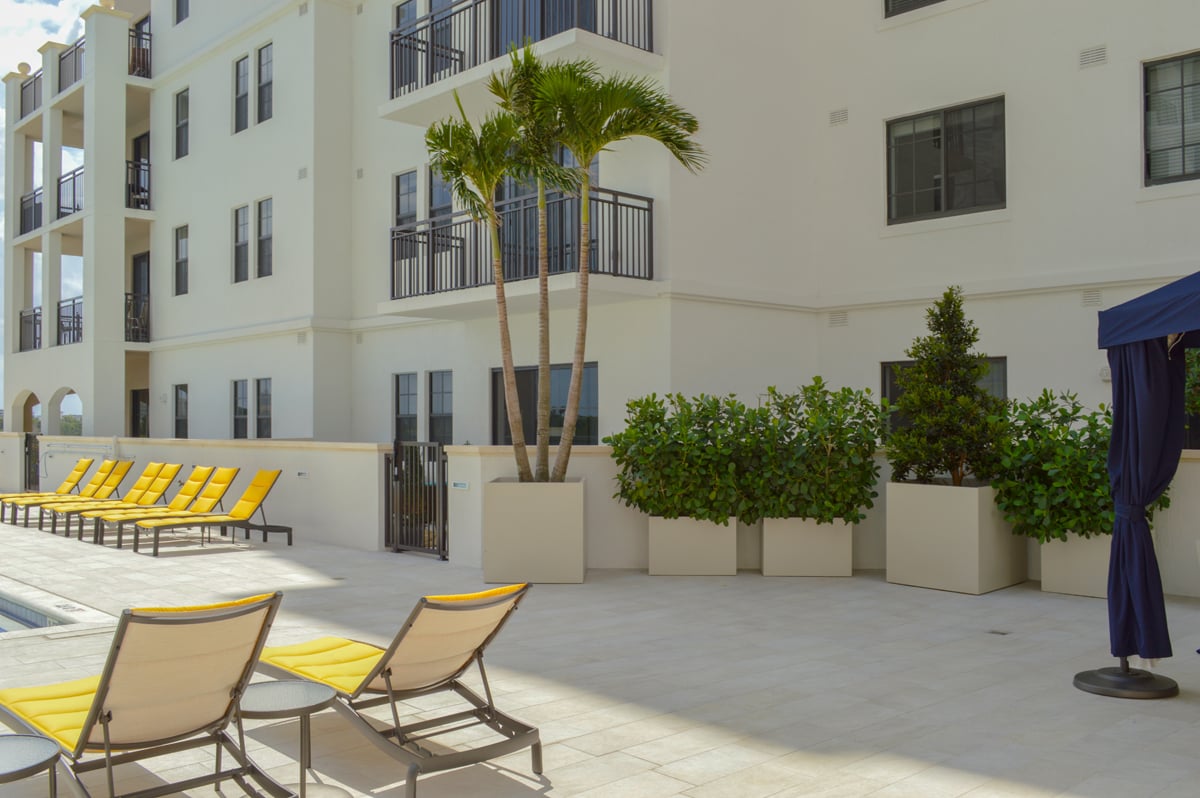
Cooling off in a shaded area on the hottest summer day is delightful — but who wants to relax in a mood-killing space? Shade decreases ambient temperatures by 15 to 20 degrees Fahrenheit, while making hard surfaces — like building facades and patios — 20 to 45 degrees Fahrenheit cooler.
Several plants prefer these conditions over sunny spots. However, you’ll want to assess the shade quality your yard gets before you make any purchases.
- Light: Partially filtered sunlight, like under tree canopies or sites with intermittent shade.
- Moderate: Primarily reflected light, such as the forest floor.
- Heavy: A densely dim site without direct sunlight — usually north-facing or below several clustered trees.
Despite the varying levels of coverage, all plants — even those in heavily shaded areas — require some sunlight for optimal health and survival. Partial shade is two to four hours daily, while full shade is less than two hours.
Enhancing Your Property With Vibrant Low-Light Plants
Lucky for you, you can use hundreds of low-light plants in your garden. Some are colorful, others are lush green and all thrive in various pots, from large modern planters to classic terracotta containers.
For instance, moth orchids only require a spot with indirect sunlight, which allows this extraordinary variety to bloom in a sea of different colors. Many people enjoy watching their petals unfold, resembling delicate moth wings. Here are some additional shade-loving plants to add to your landscaping plans.
- Ferns: Boston and Maidenhair ferns prefer shady, moist environments.
- Begonias: Bloom in warm temperatures, humidity and moist soil, revealing unique foliage and flowers.
- Impatiens: Flourish in filtered or partial shade and usually grow 8 to 15 inches tall, sometimes up to 30 inches.
- Hostas: Grows foliage with wide-ranging sizes, textures and colors.
- Caladiums: Thrive in containers and blossom vibrant, heart-shaped red, white and pink flowers.
You can spruce up your outdoor space with these shade-tolerant plants, even with limited natural light. However, there is more where these came from. For example, it may be an even better idea to research your area’s native plants — these are already well-suited to your climate and require less maintenance.
How to Prepare Your Shaded Outdoor Space for Planters

Brightening a dim spot with colorful plants and customizable planters is not as easy as buying a few at the store and transplanting them into a pot. You must prepare your outdoor space beforehand to ensure your newcomers do well.
Assess the ground conditions — is your lawn level enough to provide adequate drainage and stability? Even if you don’t plan to plant your low-shade plants into the earth, you don’t want them to tumble on uneven or eroded terrain. Adding topsoil to sunken areas will smooth the ground, while a soil compactor can firm it up and keep it in place.
Because there is less sun in these shadowed locations, water might take longer to dry. While shade-loving plants may enjoy the moisture, you and your guests won’t want to spend time in a muddy, oversaturated yard. Therefore, you’ll want to identify drainage patterns and rectify areas with high saturation before diving into gardening projects.
Choosing a well-draining, nutrient-rich soil for container planting is also critical. Select soil with heavy organic matter and natural fertilizers for optimal root growth and plant health. Soil testing can help you determine if the soil is ready for your plants or if improvements are necessary. Enhancing soil quality could entail adjusting pH levels, adding compost or laying mulch for better soil structure.
Customizable Planters — Adding Versatility and Interest to Shady Places
Container gardening opens several doors for using customizable planters in shaded spaces. You can turn a dreary area on your property into a bright and colorful oasis with unique pots in geometric or curvy shapes, different materials and various sizes.
Infusing versatility will keep your design interesting and enable you to mix different styles for your tastes. Specifically, you should focus on materials when selecting the best containers for your shaded garden.
For instance, porous concrete planters could cause the soil to lose its moisture quickly. Clay pots may also crack or chip in the shade due to coolness, particularly if temperatures drop significantly in the winter.
Fiberglass is a much better option — despite not having proper drainage, it’s easy enough to drill holes at the bottom if necessary. Shady areas also allow you to use metal containers since they won’t get as hot as they do in direct sunlight.
Consider these additional factors when selecting customizable planters:
- Weight and durability to ensure you can move them around based on your plants’ needs
- Customizable drainage, such as self-watering pots or trays
- Modular planters so you can modify various components as your plants grow
- Accessories like trellises and stands allow you to grow taller plants or raise containers off the ground
If you want to get creative with your outdoor planters, opt for containers with surfaces you can paint on — this allows you to personalize your pots in your favorite colors and patterns. You could also engrave them or memorialize a loved one.
Of course, it’s not all about aesthetics. Whatever planters you choose must meet your flowers’ and greenery’s particular needs. Shaded plants have very different requirements than full-sun plants, and you want to ensure they last a long time.
Maintenance and Care Tips

Maintaining a shaded container garden might seem daunting for first-timers who understand that shade-loving plants and sun-loving plants have distinct care requirements.
You must consider how often the plants need watering and fertilization, what attracts pests and how frequently they need pruning. Shade-tolerant plants might also show different signs indicating poor health. Here are a few helpful tips to remember as you maintain your shaded garden.
Water Carefully
Because sunlight doesn’t dry out the soil as quickly in shady zones, avoid overwatering. You can check the soil moisture by sticking your finger into the dirt and seeing if the first inch is dry.
Be sure to look up each species’ watering needs. Otherwise, irrigating your plants too often could lead to root rot and die-off.
Use Less Fertilizer and Pesticides
Using minimal fertilizer is best. However, if you need to apply it, a water-soluble product will ensure the plants get the most critical nutrients at vital growing stages. Likewise, opt for an organic pesticide product — like neem seed extract — to mitigate infestations before they take over.
Remember that these synthetic chemicals could harm the surrounding soils, beneficial insects and pollinator species. Always use them in moderation and opt for safer alternatives whenever possible.
Monitor Light Conditions
Your shaded area may receive some sunlight during the day. If the plants you’ve chosen don’t like any light, consider getting a shade for those sunnier hours. Otherwise, your plants might not do well.
Conversely, if your container garden likes some sunlight but its standard location doesn’t get much, use wheeled planters and move them around on your patio at different times of the day.
A Shaded Container Garden Can Be Everything You Hoped for and More
Create a perfect place to relax and entertain friends and family while escaping the relentless summer sunshine. A few brightly colored plants and unique planters are all it takes to make your shady container garden come to life. Enjoy the creative process and allow your outdoor design to make a statement.